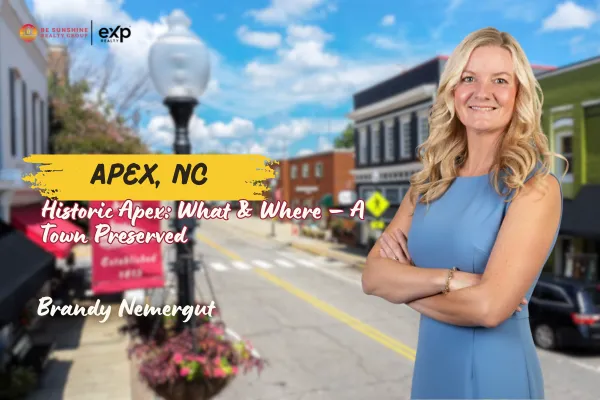
Historic Apex: What & Where — A Town Preserved
Historic Apex: What & Where — A Town Preserved
🚉 Origins: Railroad Town Turned Main Street
Apex traces its beginnings to the Chatham Railroad. The town was incorporated in 1873, growing around the rail stop — the “apex” or highest point of the line. Wikipedia+1
The centerpiece of its historic legacy is the Apex Union Depot (built 1914), originally a passenger station for the Seaboard Air Line Railroad. Today it serves as the Visitor Center and Chamber of Commerce, anchoring the historic district on Salem Street. Wikipedia+1
Over time, much of the town’s early-20th-century commercial and residential building fabric was preserved — fires, decline in rail’s prominence, and slow growth spared many of the old structures. As a result, downtown Apex remains one of the best-preserved intact “turn-of-the-century railroad towns” in North Carolina. Apex NC+2Wikipedia+2
📐 District Boundaries & Regulatory Overlays
The Historic District is officially listed on the National Register of Historic Places, and includes a mix of commercial, residential, and institutional buildings spanning roughly 1870–1950. Apex NC+1
To guide new development, infill, or renovation — especially around the core — the town created the Small Town Character Overlay District in 2006. The purpose: to preserve downtown’s traditional character in new and adaptive projects. Apex NC+2Apex NC+2
Maps of both the Historic District and the Overlay District are publicly available online through the town’s official “Maps & Plans” portal. Apex NC+1
🏠 Architectural Character & Home Styles
Walk the historic streets of Apex and you’ll notice a rich architectural mix — partly reflecting the town’s layered growth from the 19th into the mid-20th century. Common styles include:
Queen Anne / Late Victorian: Many early homes — steeply pitched roofs, asymmetrical facades, wrap porches, decorative brackets — typical of late 1800s and early 1900s. Arquivos do Estado da Carolina do Norte+2Apex NC+2
Bungalow / Craftsman: Modest-sized homes built in the early 1900s–1920s, often featuring front porches, broad eaves, exposed rafter tails, and simple, functional layouts. Arquivos do Estado da Carolina do Norte+1
Minimal-Traditional and Vernacular Mid-Century Houses: As Apex grew, simpler, smaller post-WWII houses and cottages appear, often reflecting modest build-costs and utilitarian design. Arquivos do Estado da Carolina do Norte+1
Early Commercial / Main-Street Buildings: Brick storefronts, railroad-era commercial facades, sometimes with attached residential units or mixed use — giving downtown a walkable, mixed-use character. Wikipedia+2Apex NC+2
Together, these styles create a visually and historically coherent neighborhood fabric — one fewer communities preserve with this depth.
Why Historic / Legacy Homes Matter — The Appeal & Value
Owning in such a district offers benefits few newer subdivisions can match.
Authentic charm & sense of place: These homes and streets tell the story of Apex — rail days, small-town commerce, community evolution. For buyers who value character, walkability, sense of history, and tangible connection to past generations, this is a draw that doesn’t depreciate easily.
Walkability, Mixed Use & Community Feel: Because commercial and residential are intertwined, many historic areas put you near shops, restaurants, festivals, parks, and community amenities without needing a car. That’s a lifestyle hard to replicate in far-out subdivisions.
Demand & Premiums for Heritage Homes: In many markets, heritage homes with authentic charm, mature trees, and proximity to downtown walkability tend to command a premium — especially among buyers seeking “lifestyle + character + convenience” rather than cookie-cutter homes.
Historic Recognition & Incentives: Being part of a registered historic district brings possibilities like façade grants (the town offers some financial incentives for rehabilitating façades), recognition, and community support for maintaining character. Apex NC+2Apex NC+2
For many buyers, a 1910s cottage on a tree-lined street near Salem Street — even if it needs updating — represents a rare blend: walkable downtown living, architectural character, and potential long-term value.
But It’s Not Without Constraints: Preservation Rules & Renovation Realities
Owning in a historic district comes with trade-offs. The overlays and preservation rules impose real limitations on what you can and can’t do.
🚧 What the Overlay & Historic District Rules Cover
The Small Town Character Overlay requires that any redevelopment or major renovation “respect the architectural qualities that define the downtown character.” That means new infill or additions must match or harmonize with existing building scale, massing, roof types, window/door patterns, façade rhythm, setbacks — in short: preserve walkable, cohesive historic-scale streetscapes. Apex NC+2Apex NC+2
If you plan exterior modifications — new façade treatments, siding, additions, or even major repairs — the property may be subject to design review under UDO (Unified Development Ordinance). Apex NC+2Apex NC+2
If the lot lies within the Overlay District, even if the building is not “contributing” (i.e., not historic), infill or rebuilds must follow design standards. Apex NC+1
For historically “contributing” buildings — those counted among the 150+ primary/secondary structures in the Historic District’s official inventory — changes to exterior form, windows, rooflines, porches, or layout may require additional review or approval. Apex NC+1
🛠️ Renovation Challenges & What You Need to Plan For
Limited flexibility for floor-plan changes: Opening up interiors, expanding kitchens, or building large additions often require careful planning to ensure the exterior remains consistent with historic scale — sometimes meaning smaller or “stealthy” additions, or placing new space to the rear rather than front.
Material, window, and door selection restrictions: Using vinyl siding, modern metal-looking windows, or overly large windows may violate design standards. You’ll likely need traditional materials or historically compatible replacements.
Permits, reviews, and time delays: Renovation may trigger design-review, permit review, possible multiple cycles of comment and revision — often adding time, complexity, and cost. Under the non-residential overlay form, even administrative approvals take at least one 10-business-day review cycle. Apex NC+1
Trade-offs between preservation and modern comfort: Installing modern HVAC, plumbing, insulation, or energy-efficient windows must be done sensitively to avoid compromising historic integrity. That may mean higher cost for retrofits or custom work.
📄 Benefits vs Limitations: Incentives + Restrictions
That said, the Town of Apex recognizes that preservation must balance with living demands. The Overlay program offers incentives — for example, façade grants and reduced capacity fees for businesses locating in the Downtown Festival District. Apex NC+1
However, those come with strings: you must comply with design standards, keep facades historically appropriate, and follow building-review protocols. For many, that’s a fair trade — but it means buying an older home in Apex is more process-intensive than buying a cookie-cutter new build.
Renovating the Right Way — Strategy for Owners & Buyers of Historic Homes
If you’re considering buying or renovating a historic-era home in Apex, here’s a practical approach that balances heritage and modern living.
✔️ Step 1: Pre-offer Due Diligence
Before signing anything, pull up the official Historic District and Overlay maps (available via the town’s “Maps & Plans” portal). Confirm whether the lot/building is within Overlay boundaries or listed as “contributing/primary/secondary.” Apex NC+2Apex NC+2
Ask the seller (or existing owner) for any records of previous renovations — whether windows, additions, or major repairs — since past modifications could affect approval or compliance.
✔️ Step 2: Enlist a Heritage-Savvy Contractor & Realtor Early
Historic houses often have quirks: nonstandard framing, outdated infrastructure, site or drainage issues, or original materials that must be preserved. A contractor experienced in historic renovation (or adaptive reuse) helps navigate these.
A Realtor familiar with historic Apex can help provide a “character premium vs renovation cost” analysis — helping you model whether the home’s value will outweigh rehab investment.
✔️ Step 3: Plan Interior Upgrades & Systems Renovation Discreetly
Many homeowners prioritize updating wiring, plumbing, HVAC, and insulation — modern necessities that don’t necessarily alter historic appearance. Done carefully, these upgrades can significantly improve comfort and safety while preserving character.
If you need more space (e.g., larger kitchen, bigger bathrooms), consider rear or side additions that don’t alter the historic façade — preserving street-facing charm.
✔️ Step 4: Comply with Approval Process & Get Permits Ahead of Time
Any exterior alteration requires compliance with design standards under the Overlay; often requires administrative approval or formal review. Submission, review, and possible revisals take time — factor that into your renovation timeline. Apex NC+2Apex NC+2
If you plan significant rehab, document and photograph existing conditions (windows, siding, trim, porches) before work begins — helps in ensuring compatibility with original details or for grant/credit eligibility.
✔️ Step 5: Explore Incentives & Historic Preservation Support
For income properties or commercial conversions, there may be local incentives (façade grants) for preserving or restoring historic features. The Overlay program sometimes reduces municipal capacity fees for qualifying properties in the Downtown Festival District. Apex NC+1
For residential properties, check whether state or federal historic-rehab tax credits apply (if the building is certified and work follows preservation standards). Proper planning and compliance are essential — and benefit from professional guidance.
✔️ Step 6: Value the “Heritage Premium” — But Build in Contingency
Historic, walkable, character-rich homes tend to retain value, especially amongst buyers seeking “lifestyle + charm + convenience.”
But you must account for the extra costs: slower approvals, higher renovation costs, possible surprises (e.g. old wiring, plumbing, hidden rot), and limited ability to expand or alter dramatically.
The Realtor + Heritage-Savvy Advantage: Why Local Guidance Matters
Because of the overlays, specialized regulations, and nuanced value trade-offs, working with a Realtor (or agent team) who knows historic-Apex intimately dramatically increases your odds of a successful purchase or renovation.
Here’s what such a specialist brings to the table:
Boundary and overlay map knowledge — They can run a property’s exact address through official town maps, confirm overlay or historic-district status, and advise on what kinds of renovations or redevelopment are allowed.
Historic-home valuation insight — They understand how much buyers value “character, walkability, provenance,” and can help price or bid accordingly — balancing “charm premium” against likely rehab costs.
Contractor & trades networks — They often know contractors experienced in historic rehab or sensitive renovations (plumbing, wiring, retrofit insulation, porch repair, period-appropriate windows), which reduces the risk of poor workmanship or code issues.
Process management & approvals — Agents familiar with the Town’s review cycles, permit scheduling, and submission requirements can help streamline apps and avoid costly delays.
Exit-strategy advisory — Whether you intend to stay long-term or resell, a heritage-savvy Realtor can model resale value, likely buyer profile (who values historic homes), and time-to-sale expectations — often very different from standard suburban homes.
In short: For historic properties, a local expert isn’t just helpful — they’re essential.
What Buyers Must Ask (and Confirm) Before Buying a Historic Home in Apex — Your Due-Diligence Questionnaire
Use this as your own “Historic-Apex checklist” before writing an offer or renovation plan:
Is the property within the National Register Historic District? Is it listed as a “contributing” structure (primary/secondary)?
Is it within the Small Town Character Overlay boundary (or split by it)?
Have any previous renovations been made (windows, siding, additions)? Are they documented?
Is there a façade grant or other preservation incentive available for the property (residential or business)?
What are the requirements under UDO Section 6.3 for setbacks, massing, façade design, materials, and rooflines (for new builds or major exterior changes)?
If planning interior changes (kitchen, bathrooms, systems), which changes trigger exterior compliance (porch removal/addition, dormer windows, siding, etc.)?
Are there contractors local to Apex experienced with historic-home rehab (plumbing, electrical, structural, period windows/doors)?
What are comparable sales for similar historic houses nearby (recently sold “as-is,” recently renovated, or modernized)? Does the “charm premium” justify extra costs?
For long-term planning: what is maintenance cost (roof, wood siding, older wiring/plumbing), and what are potential constraints on expansions — e.g., lot size, setbacks, site coverage under overlay rules?
Realistic Example: The 1910s Cottage — Dreams & Tradeoffs
Imagine you find a small 1910s bungalow near Salem Street. It has wide front porch, original wood floors, mature shade trees, and that walkable “main-street to porch swing” charm.
Why you fall in love:
Walkable downtown access — shops, cafés, festivals, greenways — without needing a car all the time.
Architectural soul and character (original period details, front porch, neighborhood streetscape).
Size and scale — manageable for one or two people, empty nesters, or a couple — but with potential if thoughtfully renovated.
What you must face:
Renovation costs — windows, wiring, plumbing, HVAC, perhaps structural updates.
Overlay compliance — any addition, exterior renovation, or major change likely requires permit and design review. Could impact what you can do with kitchen expansion, garages, outdoor spaces, etc.
Ongoing maintenance — historic siding, woodwork, possible termite risks, older foundations or wiring/plumbing issues.
Limited upside for expansion — small lot, overlay restrictions, mature trees and site constraints.
With a heritage-savvy Realtor + good contractor — you might be able to:
Leverage façade grants or incentives for preserving the historic character.
Renovate discreetly: move wiring/plumbing inside, insulate walls, modernize kitchen/bath — while preserving porch, windows, siding, and “look.”
Price the property with a “charm premium,” appealing to buyers who value walkability, neighborhood history, and downtown lifestyle.
Create a home that blends history with 21st-century livability — and likely remain desirable for resale among a niche buyer pool.
Final Thoughts: Historic Apex — A Unique Real-Estate Proposition With Rights and Responsibilities
Historic and legacy-home areas in Apex represent something increasingly rare: a well-preserved, walkable, character-rich small town core — directly adjacent to growing suburbs, job centers, greenways, and modern amenities.
Owning a piece of that heritage isn’t for everyone. It requires patience, commitment, and respect for history. But for those willing to navigate overlays, approvals, and thoughtful renovation — the payoff isn’t just in square footage, but in belonging, sense of place, community, and long-term value.
For buyers who value charm over cookie-cutter, walkability over wide-open lots, and character over convenience — historic Apex offers a blend few newer developments can match.
For anyone looking to buy a home in Apex, NC, Be Sunshine Realty Group—brokered by eXp and led by Brandy and Lance Nemergut—offers the local expertise and personal attention that make finding the right home smoother and more successful.
Brandy Nemergut, Realtor ~ eXp Realty Raleigh, NC
919-583-6895
Find EVERYTHING you need to know about The Raleigh Triangle in our YouTube Channel:
www.youtube.com/@LifeInRaleighNC
