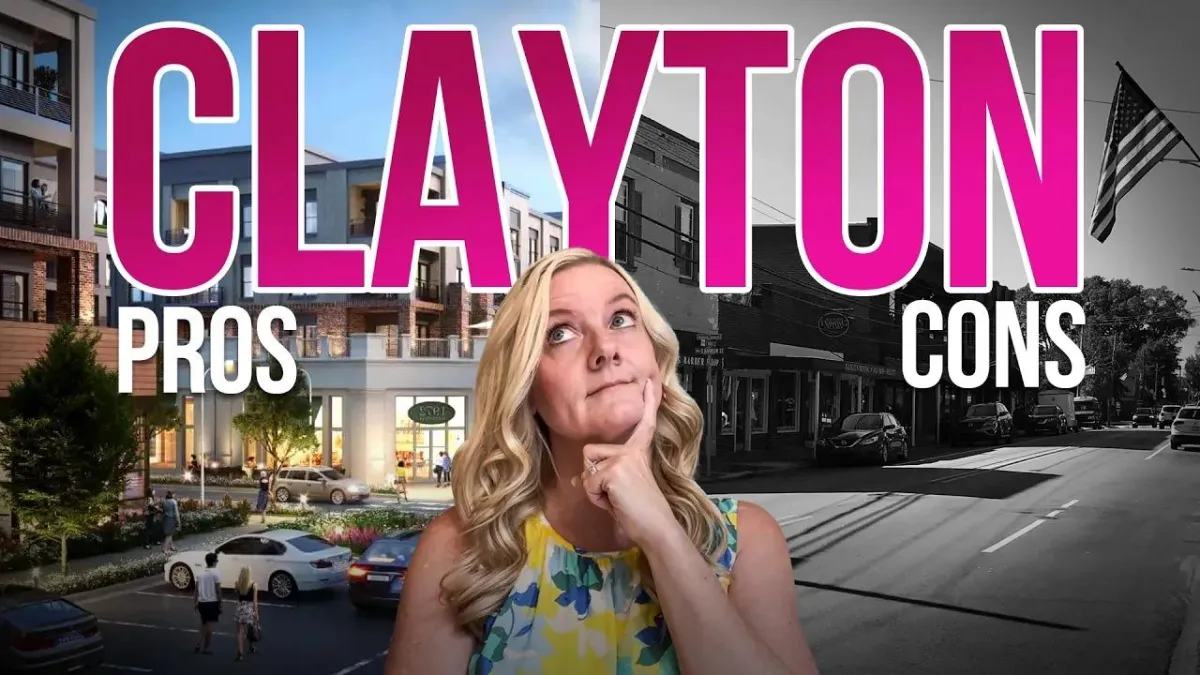
Pros and Cons of Living in Clayton, NC The Ultimate 2026 Relocation Guide
Pros and Cons of Living in Clayton, NC
The Ultimate 2026 Relocation Guide
If you’re thinking about moving to Clayton, North Carolina in 2026, there’s one thing you need to know before you start saving listings: the most important decision isn’t just the house or even the price—it’s where in Clayton you choose to live.
That one decision can affect your commute, your daily convenience, your lifestyle, and how happy you are after the move.
Clayton continues to grow (now around 32,000 residents and rising), and for many buyers it offers a compelling mix of value, charm, and access to the Raleigh–Triangle area. But it’s not the perfect fit for everyone. In this guide, we’ll break down what’s new, what’s improving, and the real pros and cons of living in Clayton so you can make a confident decision before falling in love with the wrong neighborhood.
Why “Which Part of Clayton?” Matters More Than You Think
One of the biggest relocation mistakes people make is choosing a home based on pretty listing photos without thinking through their actual day-to-day drive.
Clayton is made up of different pockets, and your experience can feel very different depending on whether you’re closer to:
US-70
NC-42 / Veterans Parkway
I-540 access points
Flowers Plantation side
Cleveland-area side
Even if two homes are both technically “in Clayton,” the commute, convenience, and traffic patterns can be dramatically different.
Relocation Tip (from someone who’s done it)
My family and I relocated from California to the Raleigh–Triangle area years ago, sight unseen. One of the best lessons we learned: choose your area based on where you drive—not just the house itself.
A beautiful home can lose its sparkle fast if your commute or daily errands become frustrating.
Road Name Changes You Should Know in 2026
If you’ve been researching Clayton online, using GPS, or talking to locals, you may notice some road names sound different than what older maps or conversations say.
Starting in February 2025, some major corridors near Clayton were renamed:
NC-42 West → Veterans Parkway
US-70 Business → Clayton Boulevard
So if you hear different names for what seems like the same road, you’re not imagining things—those updates are real and they matter when navigating the area.
Commuting From Clayton: A Major Pro… or a Major Con
Clayton can be a great location for some commuters—but a frustrating one for others. It really depends on where you work and how you feel about tolls.
If You Commute Toward Raleigh
If you’re heading toward downtown Raleigh or the east/southeast side of Raleigh, Clayton can work very well—especially if you choose a neighborhood with good access to the main corridors.
But here’s the key: off-peak traffic and rush-hour traffic are two completely different experiences. A route that feels easy at 10:00 a.m. can feel much longer during the weekday commute window.
If You Commute Toward Cary, West Raleigh, or RTP
If your job is on the western side of the Triangle, route strategy becomes even more important.
Many buyers choose Clayton because they get more house for the money and then use toll roads selectively to protect their time. Others want to avoid tolls completely.
There’s no wrong answer—but it’s a decision you want to make before you commit to a house.
A Smart Relocation Tip
Don’t just look at commute estimates on a map. Test drive your route during the actual hours you’d be traveling. Clayton-to-Raleigh at 9:30 a.m. is not the same as Clayton-to-Raleigh at 7:30 a.m.
Traffic and Construction in Clayton: Frustrating, But Often a Good Sign
Let’s be honest: you can’t talk about Clayton without talking about traffic and construction.
Yes, there have been years when road work felt constant. But in a fast-growing town, that’s usually what it looks like when infrastructure is catching up to growth.
And long term, that’s exactly what buyers want to see.
Infrastructure Improvements That Matter
The I-40 widening project between Raleigh and the Clayton area was completed in 2024, which has helped many commuters.
Complete 540 is scheduled for completion in 2028, improving outer-loop connectivity.
Long-term upgrades to US-70 in the corridor are part of a larger regional plan, including sections tied to future interstate-level standards.
None of this means your commute becomes perfect overnight—but it does mean Clayton is not being ignored. Real infrastructure investment is happening, and that matters for both convenience and long-term desirability.
Pro: More Home for Your Money Than Raleigh
One of Clayton’s biggest advantages is value.
For buyers who want more space, larger lots, or newer homes at a lower price point than Raleigh, Clayton remains one of the most attractive options on the southeast side of the Triangle.
As of first quarter 2026, the median home price in Clayton is around $383,000, compared with roughly $425,000 in Raleigh.
That gap is a big reason more buyers are looking this direction—especially as prices in Cary, Apex, Holly Springs, and other western suburbs continue to feel out of reach for many households.
Why So Many Buyers Are Looking South and East
For years, many relocation buyers focused on the west side of the Triangle. But in 2026, more people are feeling sticker shock in those areas and are now looking south and east for affordability while still staying close enough to enjoy the Triangle lifestyle.
And for many families, Clayton hits that sweet spot:
More space
More home for the money
A quieter, more relaxed feel
Still within reach of Raleigh
Pro: A Rural-Suburban Feel With Room to Breathe
One of the reasons people fall in love with Clayton is the lifestyle.
Compared to denser suburbs, Clayton can still offer that “breathe a little more” feeling—more greenery, larger lots in some areas, and a less hectic day-to-day pace.
For buyers coming from high-density, high-traffic markets, that can feel like a huge upgrade.
If you want a home with some breathing room but still want access to shopping, dining, and Raleigh-area job centers, Clayton often feels like a strong middle ground.
Pro (and Sometimes Con): Clayton Is Growing Fast
Growth is one of Clayton’s biggest strengths—and for some people, one of its biggest drawbacks.
Why Growth Is a Positive
Clayton is becoming more “complete” as a town, with:
Expanding master-planned communities (like Flowers Plantation)
More retail and service options
Mixed-use development plans
More lifestyle-focused amenities
Examples include:
A Chick-fil-A planned in the Flowers Plantation area
Major mixed-use concepts like the Copper District
Additional planned development in areas that aim to improve convenience and walkability over time
If you like growth because it brings restaurants, services, and amenities, you’ll probably love the direction Clayton is headed.
Why Growth Can Be a Negative
If you want Clayton to stay exactly the way it was 10 years ago, the pace of development may feel overwhelming. Construction, traffic changes, and shifting town character can be frustrating for people who prefer slower growth.
Pro: Outdoor Lifestyle and Trails Are Better Than Many People Expect
Clayton surprises a lot of people when it comes to lifestyle—especially if you enjoy trails, greenways, and outdoor time.
River Walk and Greenways
The River Walk on the Neuse is one of Clayton’s standout features. It’s a beautiful paved trail that gives the town a “weekend reset” vibe without needing to drive far.
Clayton also connects into additional greenway segments and broader trail systems, which is a major plus for people who prioritize:
Walking
Running
Biking
Nature access
Family-friendly outdoor time
For many residents, a perfect weekend in Clayton is simple:
Coffee in town
A trail walk
Local food
Relaxed pace
That’s a lifestyle benefit many outsiders don’t expect until they experience it.
Pro: Downtown Clayton Has Real Charm (and a Growing Scene)
Downtown Clayton is one of the town’s most underrated strengths.
It has that historic Main Street charm, but it’s not sleepy or stuck in the past. There’s a mix of longtime favorites and newer concepts that make it feel increasingly like a destination.
What People Love About Downtown
You’ll find:
Local restaurants
Coffee shops
Cocktail spots
Historic character
Community events
A more walkable, “park once and enjoy” feel
Downtown’s energy has been growing, and projects like The Station have added to that momentum by creating more of a hangout atmosphere with local vendors and makers.
There are also newer concepts and planned additions that signal Clayton’s downtown is continuing to evolve—not just as a place to eat, but as a place to spend time.
Pro: Commercial Convenience Is Catching Up
Clayton’s commercial side has been improving, especially in growing areas like Flowers Plantation.
Residents already have access to key essentials (including grocery anchors), and more retail and dining options are gradually filling in.
For families, these additions may seem small on paper—but they’re actually a big deal in daily life. Every new grocery, restaurant, or service option reduces the need to leave town for basic errands.
A Quick Reality Check on Rumors
You’ll often hear online buzz about brands like Target, Costco, or other major retailers. It’s smart to stay grounded here: until something is officially filed or announced, treat it as speculation.
That said, the broader trend is real—Clayton’s commercial growth is accelerating, and it’s much more active than it was a few years ago.
Con: Schools Can Be a Sticking Point Depending on Your Priorities
Schools are one of the biggest “it depends” topics for buyers considering Clayton.
Some families are very happy with their options. Others prefer Wake County schools. And many families explore charter or private schools depending on their child’s needs and learning style.
Best Advice on Schools in Clayton
If schools are a top priority for your move:
Research school by school
Don’t rely only on county-level impressions
Consider your child’s specific needs and personality
Review current boundaries, programs, and options
This is one of those areas where broad generalizations can lead buyers in the wrong direction.
Con: Clayton Is More Spread Out Than It Looks
Clayton can look compact on a map, but once you’re living there, you may realize it feels more spread out than expected.
It has multiple pockets, and travel within the area can take longer than newcomers assume. It’s not uncommon to go from one side of greater Clayton to another and think, “Wow, that took longer than I expected.”
That’s not necessarily a dealbreaker—it just means you need to plan your location around your daily routine:
Work
Schools
Grocery runs
Activities
Family/friend visits
Weekend hangouts
Con: Shopping and Entertainment Are Improving, But Not Fully Built Out Yet
Clayton has the essentials and a growing local scene, but it’s still not a fully built-out “big retail” suburb.
If you want a one-stop shopping day with every major store in one place, you may still find yourself driving to nearby areas like Garner (especially around major retail centers).
For some people, that’s no big deal. For others, it’s a frustration.
This comes down to lifestyle preference:
If you’re okay driving a bit for bigger retail runs, Clayton may be a great fit.
If you want everything at your fingertips today, you may prefer a more built-out suburb.
Con: Commutes to the Western Triangle Can Be Tough
Clayton is often a strong fit for Raleigh access, but if you commute regularly to:
RTP
Cary
Morrisville
West Raleigh
Durham (depending on route and timing)
…you need to be realistic about drive time.
Rush hour can stretch quickly, and in 2026, commute planning should be one of your top filters when deciding whether Clayton is the right town for you.
And again, this comes back to toll road strategy:
Will you use tolls occasionally?
Frequently?
Never?
Answer that before you choose your neighborhood.
So… Is Clayton, NC a Good Place to Live in 2026?
Clayton can be an amazing fit if you want:
More home for your money
A town with charm and personality
Outdoor space and trails
A growing community with increasing amenities
Reasonable access to Raleigh
A more relaxed, rural-suburban feel
Clayton may not be the best fit if you need:
A super short commute to RTP or the west side of the Triangle
A fully built-out suburb with major retail everywhere
Zero traffic growth or construction
A town that feels exactly like it did 10 years ago
Final Thoughts: Choose Clayton by Lifestyle, Not Just Price
Clayton’s biggest strength is that it offers a lot of value and lifestyle for the money—but only if you choose the right pocket for your needs.
The best way to evaluate Clayton is to look at the full picture:
Price
Commute
Schools
Lifestyle
Convenience
Growth tolerance
A house can be perfect on paper and still be the wrong fit if the location doesn’t support your real life.
If you’re relocating to Clayton or anywhere in the Raleigh–Triangle area, start with your lifestyle and daily routine first. Then choose the neighborhood that supports it.
Find EVERYTHING you need to know about The Raleigh Triangle in our YouTube Channel:
youtube.com/@LifeInRaleighNow
