Are You Moving to the Wrong Place in Raleigh? Let's Fix That!
Home Page - Living In Raleigh Now
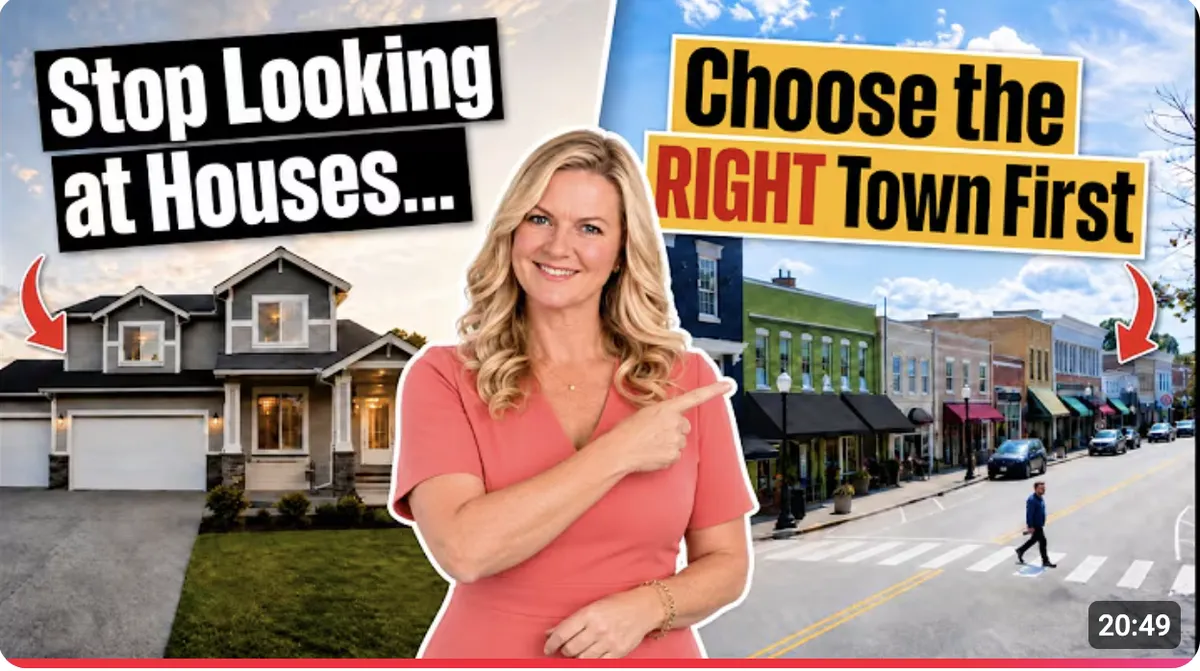
If you’re moving to the Raleigh-Durham Triangle, there’s a pretty good chance you could be looking at the wrong town.
It happens all the time.
People spend months researching online. They find the town with the best reputation, a neighborhood someone recommended in a Facebook group, or a house that looks perfect on Zillow.
Then they move here and realize:
“I love my house, but I’m not sure I love where I live.”
That’s because Raleigh, Durham, Chapel Hill, and the surrounding suburbs can look surprisingly similar when you’re researching from hundreds—or even thousands—of miles away.
But once you live here, the differences become much more obvious.
Your commute can change dramatically depending on where you live. So can your housing options, neighborhood age, restaurants, shopping, walkability, access to the airport, and even what an average Saturday looks like.
So instead of another generic list of the “best places to live near Raleigh,” let’s look at these communities differently.
Which town fits the way you actually want to live?
Start With Your “Daily Triangle”
Before you start falling in love with houses online, think about what I call your daily triangle:
Where will you live?
Where will you work?
Where are the schools, if that applies to you?
Where are the places you’ll actually use every week?
Build that triangle first.
Then look for the house inside it.
My family and I moved to North Carolina from Southern California without seeing the area first, so I understand how overwhelming it can feel to make this kind of decision from thousands of miles away with Google Maps open on one screen and Zillow on the other.
The Triangle offers a lot of great choices.
The key is figuring out which one fits you.
Raleigh: Best for Variety, City Energy and Established Neighborhoods
If you want the closest thing to a traditional city lifestyle in the Triangle, Raleigh is probably one of the first places you should explore.
But Raleigh isn't just one lifestyle.
That’s where relocation buyers sometimes get it wrong.
Closer to downtown, you’ll find restaurants, breweries, museums, concerts, festivals and older established neighborhoods.
Head north toward Midtown or North Raleigh and things become much more suburban.
Northwest Raleigh puts you closer to Umstead State Park, Brier Creek, RDU International Airport and Research Triangle Park.
Head farther south or east and you’ll find a combination of established neighborhoods and newer development.
That variety is one of Raleigh’s biggest strengths.
Depending on your budget and preferred lifestyle, you might find an older bungalow under mature trees, a newer townhome, a traditional suburban neighborhood or a multimillion-dollar luxury property.
Raleigh has also continued creating more places for people to gather, with destinations like Dorothea Dix Park adding another dimension to city life.
Just keep your expectations realistic.
Raleigh is not Manhattan.
You’ll probably still want a car.
There are walkable pockets, but whether Raleigh feels walkable depends heavily on exactly where you live.
Raleigh may be a great fit if you want restaurants, events, parks, established neighborhoods and some city personality without living in a massive metropolitan area.
Cary: Best for Polished Convenience and Amenities
If Raleigh offers variety, Cary offers organization.
Cary is the friend who already made the reservation, printed the itinerary and somehow remembered to pack the snacks.
It feels polished, established and convenient—which is exactly why so many relocation buyers start their search here.
Cary’s location between Raleigh, RTP and RDU makes much of the town extremely convenient for people working throughout the Triangle.
You’ll also find parks, greenways, restaurants and shopping throughout the area.
And Cary has become more interesting around its downtown.
Downtown Cary Park has created a true community gathering space, helping Downtown Cary become much more than subdivisions and shopping centers.
Housing also offers more variety than some buyers expect.
You’ll find condos and townhomes at lower price points, established single-family neighborhoods, newer communities and luxury homes.
The biggest trade-off?
You’ll typically pay a premium for Cary’s popularity and location.
And if you're looking for something gritty, edgy or highly urban, Cary may feel a little too buttoned-up.
But if convenience, amenities and an established suburban lifestyle are high on your list, Cary deserves serious consideration.
Durham: Best for Character, Culture and Food
Durham has an entirely different personality.
It’s creative, historic, eclectic and a little less polished—and that’s a big part of its appeal.
Here, old brick warehouses, historic neighborhoods and newer development mix with local restaurants, music, art, Duke University, healthcare and technology.
American Tobacco Campus captures much of what makes Durham unique. Former tobacco warehouses have been transformed into restaurants, offices and entertainment, with DPAC and the Durham Bulls nearby.
Durham also has one of the strongest food scenes in the Triangle.
This is the city I think of when someone tells me:
“I don’t need everything perfectly manicured. I want character.”
But Durham can vary dramatically by neighborhood.
Downtown Durham is very different from South Durham. Hope Valley feels different from Trinity Park. And your access to Research Triangle Park can change significantly depending on where you live.
So don’t simply decide you want “Durham.”
Figure out which Durham fits your lifestyle.
And before buying a house, test your commute during the time of day you’ll actually be driving it. A Sunday afternoon drive can look very different from Tuesday morning rush hour.
If you want culture, great food, established neighborhoods and a city with more edge and personality, Durham may be your place.
Chapel Hill: Best for College-Town Energy and Mature Neighborhoods
Head southwest and the Triangle takes on another personality entirely.
Chapel Hill has classic college-town energy, but it can also feel greener, quieter and much more residential than people expect.
UNC-Chapel Hill is obviously a huge part of the town’s identity.
Around Franklin Street, you’ll find restaurants, coffee shops, local businesses, events and plenty of Tar Heel energy.
But drive just a few minutes from downtown and the atmosphere can change dramatically.
You’ll find established neighborhoods with mature trees, winding roads and homes that feel tucked away from everything.
That’s part of what makes Chapel Hill so appealing.
You can enjoy the energy and culture of a university town without necessarily feeling like you live directly in the middle of campus life.
Communities such as Southern Village and Meadowmont offer a more planned environment, combining homes with restaurants, shops, green spaces and community gathering areas.
Housing can come at a premium, and you'll find many older established homes mixed with newer options.
Location matters here, too.
If your daily life revolves around Chapel Hill, Durham or UNC, the location can be incredibly convenient.
If you plan to commute into Raleigh every day, however, test that drive during rush hour before making your decision.
Chapel Hill may be ideal if you want mature trees, established neighborhoods, college-town culture and a more relaxed, tucked-away lifestyle.
Apex: Best for Suburban Living With Small-Town Charm
If you like Cary but want a little more historic small-town personality, Apex could be the sweet spot.
One of Apex’s biggest draws is the combination buyers frequently ask for:
A charming downtown plus traditional suburban neighborhoods.
Downtown Apex centers around Salem Street, where you'll find restaurants, boutiques, breweries, coffee shops and a historic Main Street atmosphere.
Drive five or ten minutes away and you can be in a neighborhood that feels completely suburban.
But Apex has grown tremendously.
This is no longer the sleepy little town outside Raleigh that some relocation buyers picture.
Growth has brought additional restaurants, shopping and housing.
It has also brought traffic.
Downtown Apex on Saturday morning can be adorable.
Tuesday morning at 8:00?
That can be a different conversation.
Home prices have also increased with the town’s popularity, so don't automatically assume Apex will be the inexpensive alternative to Cary.
If you want suburban convenience with genuine downtown charm and relatively convenient access toward Cary and RTP, Apex is a strong contender.
Holly Springs: Best for Newer Homes and Southern Wake County Growth
Continue farther south and you’ll reach Holly Springs.
This is a town that often appeals to buyers who tell me:
“I like newer.”
Newer neighborhoods. Newer shopping. Newer amenities. And increasingly, major employment opportunities right in town.
The life sciences industry has become an important part of Holly Springs’ growth, including Fujifilm's large biomanufacturing presence.
As a result, Holly Springs is becoming much more than a bedroom community where everyone leaves town to work.
You'll also find parks, greenways, sports facilities, breweries and numerous amenity-driven neighborhoods.
But Holly Springs is still decidedly suburban.
If your dream is stepping outside your condo and having 15 restaurants within a block, this probably isn't your town.
Rapid growth also means construction and traffic.
Spring is beautiful.
Summer is very committed.
And Holly Springs traffic at the wrong time can be equally committed.
If newer housing, suburban amenities and the growth happening in southern Wake County appeal to you, Holly Springs deserves a serious look.
Wake Forest: Best for Historic Charm and Northern Wake County Living
Head north of Raleigh and Wake Forest offers yet another option.
You get a historic downtown surrounded by a much larger suburban community.
Downtown Wake Forest has restaurants, breweries, coffee shops, events and local businesses.
Outside downtown, you'll find larger neighborhoods, newer communities, greenways, golf courses and parks, including Joyner Park.
If you tell me:
“I want some charm, community events and suburban neighborhoods, and I don't need to live right beside RTP,”
Wake Forest can be fantastic.
But remember your daily triangle.
Wake Forest is north of Raleigh.
If your life revolves around North Raleigh, Wake Forest or working remotely, the location can make a lot of sense.
If you're driving to Cary, Chapel Hill or Research Triangle Park every day, you need to look much more carefully at that commute.
Capital Boulevard has never met a traffic light it didn't want to become best friends with.
Wake Forest can be wonderful—just make sure the rest of your life fits there too.
Morrisville: Best for RTP, RDU and Maximum Convenience
Morrisville doesn't always get as much attention as Cary or Apex, but it should.
This is the town for someone who says:
“I don't need the cutest downtown. Just make my life convenient.”
Geographically, Morrisville is extremely well positioned.
Research Triangle Park is nearby. RDU International Airport is right there. Cary is next door. Raleigh and Durham are both accessible, and I-40 and 540 are close.
That makes Morrisville particularly attractive for couples who work in different parts of the Triangle or anyone who travels frequently.
It's also one of the region’s most diverse communities, something you'll see reflected in restaurants, grocery stores and community events.
Historically, one criticism of Morrisville has been the lack of a true downtown or central gathering space.
That is beginning to change.
The Morrisville Town Center project is intended to bring a more pedestrian-oriented center with shopping, gathering spaces and a town green.
The trade-off is that you're paying for the convenience.
And if your dream is a historic downtown lined with century-old buildings, Morrisville isn't Apex or Wake Forest.
But if access to jobs, RTP, the airport and multiple parts of the Triangle matters more than historic charm, Morrisville could be one of the smartest choices on this list.
Clayton: Best for More House and Space for Your Money
Now let's head southeast to Johnston County.
Clayton offers something that has become increasingly difficult to find in some parts of Wake County:
More house—and sometimes more land—for your money.
Clayton is located in Johnston County, which is an important distinction.
That means a different county, school system, tax structure and growth pattern from Wake County.
Housing options range from older neighborhoods near Downtown Clayton to newer subdivisions, master-planned communities and acreage properties.
Downtown Clayton has also developed its own personality with restaurants, breweries, events and locally owned businesses.
But another major part of the Clayton story is employment.
Novo Nordisk continues to invest heavily in its Clayton operations, while pharmaceutical and advanced manufacturing industries have become major economic drivers throughout this part of Johnston County.
That means Clayton isn't simply “the cheaper town southeast of Raleigh.”
And even within Clayton, location matters.
Downtown Clayton feels different from Flowers Plantation.
Flowers Plantation feels different from the Cleveland area.
They may all have a Clayton connection, but your daily lifestyle can be very different.
If your entire world revolves around Cary, RTP or Chapel Hill, Clayton probably wouldn't be my first recommendation.
You might save money on the house only to donate the rest of your life to Interstate 40.
But if you work in Raleigh, Johnston County or eastern Wake County, work remotely, or simply want more space for the money, Clayton gets very interesting.
Other Raleigh-Area Towns Worth Considering
These aren't the only communities worth exploring.
If newer homes and master-planned living east of Raleigh appeal to you, Wendell Falls deserves a look.
If you'd like more space, access toward Chapel Hill and the growth happening in Chatham County, Pittsboro is another town worth watching, especially as Chatham Park continues to develop.
Fuquay-Varina offers two downtown areas and can provide more house for the money than buyers may find in Cary or Apex.
Knightdale and Garner can make a lot of sense when Raleigh access is a major priority.
And if you're willing to live farther outside the urban core, places like Youngsville, Zebulon, Hillsborough and Creedmoor can open up even more housing options.
Then there's one community many relocation buyers don't initially consider.
Rolesville: The Raleigh-Area Sleeper Town to Watch
Rolesville sits northeast of Raleigh beside Wake Forest, and it has been growing quickly.
But what's interesting about Rolesville isn't simply population growth.
It's what the town is becoming.
For years, Main Street functioned largely as a road people drove through.
Now the town has been working to transform the area with sidewalks, bicycle improvements, streetscape changes and new mixed-use development.
New restaurants and businesses are arriving as well.
That means Rolesville is still building its identity.
Depending on what you want, that can be either a positive or a negative.
If you want everything established today, Cary may make more sense.
If having dozens of restaurants five minutes from your house is a requirement, Rolesville isn't there yet.
But if you like newer housing, a quieter suburban environment, proximity to Wake Forest and North Raleigh, and the idea of buying into an area while the commercial side continues catching up, Rolesville deserves a look.
So, What Is the Best Place to Live in the Raleigh-Durham Triangle?
There isn't one.
And that's really the point.
Raleigh could be perfect if you want restaurants, events and established neighborhoods—and completely wrong if your dream is half an acre with brand-new construction.
Cary may make perfect sense if your life revolves around RTP.
Morrisville may win if convenience is everything.
Wake Forest could be fantastic if most of your daily life takes place north of Raleigh.
Clayton may give you the space you simply couldn't find within your budget in Wake County.
That's why I encourage relocation buyers to stop beginning their search with:
“What's the best town?”
Instead, ask:
Where will I work?
Where do I need to be during the week?
What do I actually like doing on weekends?
Do I want activity around me or peace and space?
Do I prefer an older established neighborhood or brand-new construction?
How important is being close to RDU?
How much driving am I realistically willing to do?
If schools are part of your decision, exact addresses matter as well. School assignments, enrollment caps and application processes can change, and a town name by itself doesn't give you the complete answer.
Build your daily triangle first. Then find the house inside it.
Because Raleigh can look great on paper.
So can Cary.
So can Apex, Wake Forest, Durham, Clayton or Chapel Hill.
The real question is:
Does it work for your lifestyle?
Thinking About Moving to Raleigh or the Triangle?
If you're considering moving to Raleigh, Durham, Cary, Clayton or anywhere else in the Triangle, choosing the right community is just as important as choosing the right house.
My family and I moved here from Southern California without seeing the area first, so I've been on the other side of that computer trying to make a huge relocation decision from thousands of miles away.
Today, I help buyers do exactly that.
Whether you're moving six days from now or six months from now, we can start narrowing down the towns, neighborhoods and homes that actually fit the way you want to live.
Love where you live—and start by choosing the right place to call home.
Brandy Nemergut, Realtor ~ eXp Realty Raleigh, NC
[email protected]
919-583-6895
LivingInRaleighNow.com
